Best Time to Post on Telegram Channel: A Niche-Segmented Guide

Best Time to Post on Telegram Channel: A Niche-Segmented Guide
TL;DR. Public roundups converge on two windows for Telegram channels — roughly 1pm-4pm and 6pm-10pm in your subscribers' local time, Tuesday through Friday. That is a useful baseline, not an answer. Niche, time zone spread, and content type shift the real peak by hours, not minutes. The methodology below shows how to segment audience activity, then how to measure your own peak using Telegram's built-in stats and your scheduling tool's analytics — so you stop guessing.
If you want to skip the manual A/B testing, see how Autogram schedules per-channel time-zone-aware posts so you can run windows in parallel instead of one at a time.
What "best time to post" actually means
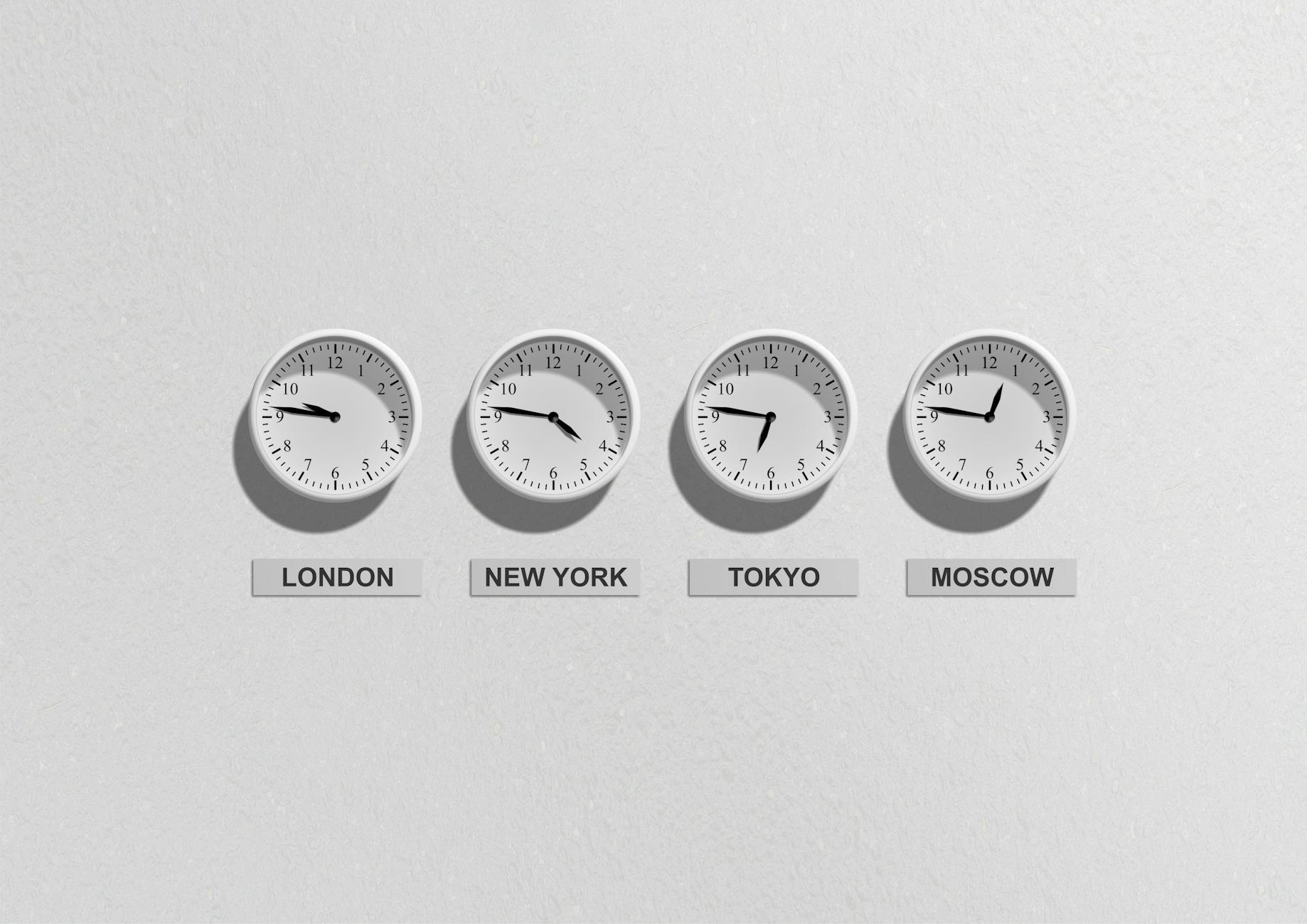
Photo by Gui Salcedo on Pexels
Most "best time to post" guides treat the question as if there is one global answer. There is not. The roundup number is a population average blended across thousands of channels in dozens of niches — for your channel, a starting hypothesis at best.
A more useful framing: the best time to post is the moment your subscribers are most likely to open Telegram in the next 30 minutes. Shaped by:
- Where they live — local time matters more than UTC.
- What they are doing — commute, lunch, evening scroll.
- What you publish — a news flash and a long essay do not peak at the same hour.
- What competing notifications they get — Telegram has no algorithmic feed, so posts sit chronologically.
The last point is what most operators miss. Telegram does not gate reach by an algorithm — every subscriber gets every post — but because the timeline is purely chronological, timing determines whether your post is at the top of the unread list or buried under a dozen others when the user opens the app.
The documented public windows
Cross-referencing roundups from Sprout Social, Buffer, Hashmeta, and Membertel, the consensus windows for general-purpose channels in 2026 are:
| Window | Local time | Days | Why it works |
|---|---|---|---|
| Lunch peak | 1pm-4pm | Tue-Fri | Subscribers check phones during breaks; rapid early views compound. |
| Evening peak | 6pm-10pm | Tue-Fri | Wind-down scroll; longest read-time per post. |
| Morning warm-up | 8am-10am | Tue-Fri | Commuters and early risers; weaker than the two above but useful for time-sensitive news. |
| Weekend dip | All day | Sat-Sun | Active hours shift later; engagement is lower for B2B, higher for entertainment. |
Use these as null-hypothesis windows. If your data does not show a different peak, default to one of them.
Two caveats. First, every "1pm-4pm" claim is local time of the subscriber, not yours. A channel run from Kyiv with a US-based audience that posts at 2pm Kyiv time hits 7am or 8am for half its subscribers. Second, these windows are weakest when depth matters more than reach — a long-form analysis needs a peak-attention slot, which often shifts later in the evening.
Niche segmentation — when generic windows fail
Photo by Negative Space on Pexels
The generic curve breaks the moment your audience is concentrated. Below is a qualitative niche map. Every row is a hypothesis to test against your own analytics.
| Niche | Likely peak | Why | What is different |
|---|---|---|---|
| B2B / SaaS | 10am-12pm and 2pm-4pm, weekdays | Decision makers read in work hours, not evening scroll. | Saturday is a write-off. |
| News / breaking | All day, with a 7am-9am surge | Audience subscribed for first-mover info. | Post when news breaks, not when the slot opens. |
| Crypto / trading signals | 7am-10am UTC and US market hours | Decision-driven, time-sensitive audience. | Off-hours posts get views but lose the trading window. |
| Entertainment / memes | 6pm-11pm weekdays; weekends all day | Pure leisure consumption. | Weekends stronger than weekdays — a flip from B2B. |
| E-commerce / deals | 12pm-2pm and 7pm-9pm | Lunch impulse and evening purchase consideration. | Tue/Wed beat Monday for promo; flash deals time exactly to peak. |
Two patterns matter. B2B and entertainment are near-inverses — mixing both in one feed underperforms two channels with separate schedules. And breaking-news channels follow events, not clocks — for them the answer is "post immediately."
Time zones — CIS vs Western Europe vs Americas
Photo by Keverne Denahan on Pexels
Time zone strategy depends on whether your audience is concentrated or distributed.
For a CIS-concentrated channel, peak windows are tighter than the global average — most subscribers sit within a 2-hour spread. A single 7pm-9pm Kyiv-time slot covers the bulk; weekends shift about an hour later.
For a Western Europe-concentrated channel, the spread is wider (UK to Eastern Europe is 2-3 hours), but the lunch-and-evening shape holds in CET. If a meaningful slice of subscribers is in MENA, do not assume CET windows generalize — Ramadan and similar calendars shift activity.
For a multi-time-zone audience spanning EU and the Americas, a 7pm CET post hits 1pm ET — a strong window for both. A 1pm CET post hits 7am ET — workable for news, weak for entertainment. For time-sensitive content, post twice, with the second post acknowledging the first ("for those who missed it earlier").
Useful technique for one-channel global audiences: alternate the primary time-zone target by content type. Long-form essays target the EU evening; trading signals target the US market open. The audience self-segments.
Methodology you can apply yourself
The point of all of the above is to give you a place to start. Real optimization happens when you measure your own channel. Here is the four-step method:
- Pull subscriber time-zone distribution. Open the channel info → View Statistics; the top-countries chart is a proxy for time zones. Translate it to local bands and weight by subscriber share. Telegram does not show stats for private or small channels (under 50 subscribers) — ask in the channel.
- Measure view velocity, not totals. The view counter keeps incrementing for hours, but the first-hour view rate is the cleanest timing signal. A post that earns 60% of its final views in the first hour was timed well; 20% caught a sleepy audience. TGStat, Telemetr, and LiveDune graph this directly.
- Run ±2 hour A/B windows for two weeks. Pick a hypothesis peak (say 8pm local). Post half your content at 6pm and half at 8pm for 14 days. Compare first-hour velocity and 24h totals. Repeat the winner vs 10pm. Three rounds isolates a real 2-hour window.
- Re-test quarterly. Time zones drift, audiences age, and holidays shift the curve. The slot that worked in February rarely wins in August.
If you publish across multiple channels, manual testing becomes a part-time job. Tools that schedule per-channel with time-zone awareness let you run window tests in parallel — see our scheduling tools comparison for the trade-offs.
Pitfalls and gotchas
- Confusing total views with timing quality. A post can collect 5,000 views over two days simply because subscribers eventually saw it. Use first-hour velocity.
- Optimizing on outliers. A single viral post skews the average. Drop top and bottom 10% before computing your "best time."
- Treating subscriber count as the goal. Time-of-day affects view rate, not growth. Frequency, content quality, and external promotion move growth far more.
- Forgetting weekly cadence. Tue 8pm out-pulls Sat 8pm for B2B; for memes it's the inverse. Test both axes.
- Ignoring competing posts. If three channels post at 8pm, slightly off-peak (8:45pm) sometimes wins by clearing the notification queue.
Related reading
- Telegram Channel Analytics Benchmark: The Four Metrics That Matter — what to measure once you know when to post.
- Cross-Channel Telegram Posting Strategy: Fan Out or Differentiate? — multi-channel timing and content variation.
- Autoposting vs Manual Telegram: A Workflow Walkthrough — the operational case for letting a scheduler hold your test windows.
- Telegram Bot API Rate Limits at Scale — once you publish on schedule across many channels, rate limits become the next concern.
FAQ
What time of day gets the most views on a Telegram channel?
From what we see across the channels we run, activity tends to cluster around 1pm-4pm and 6pm-10pm in subscribers' local time, Tuesday through Friday, for general-purpose channels. Niche channels — B2B, breaking news, crypto — often peak well outside that window.
Does Telegram have an algorithm that affects when to post?
No. Telegram delivers every post chronologically — there is no engagement-based reach gating. Posting time matters because it determines whether your post is at the top of the subscriber's unread queue when they open the app.
How do I find the best posting time for my specific channel?
Open Channel Statistics (channel info → View Statistics) and inspect the "Hours" graph — it shows when subscribers are active. Combined with first-hour view velocity on recent posts, that is the most reliable signal you have.
Should I post at the same time every day?
A predictable cadence builds habit, but a rigid daily slot is not optimal if activity varies by weekday. Pick one weekday slot (e.g. Tuesday-Friday 8pm local), and treat weekends separately — either skip or shift to a weekend window.
How does timezone affect Telegram posting times?
Posting time is meaningless without specifying whose local time. A 7pm Kyiv post lands at noon ET. Concentrated audience: optimize for the dominant zone. Distributed audience: pick the largest segment, post twice, or stagger content types.
How often should I re-test posting times?
Run 14-day blocks comparing two ±2-hour windows; once you find a winner, re-test quarterly. Audience composition drifts and holidays shift activity. Treat the result as a hypothesis with a 90-day expiry.
Bottom line
Explore Autogram's scheduling. Connect your first channel to start 7 days of Solo access, with a $1 AI budget and no card required.
Image credits
- Hero — Gui Salcedo on Pexels
- Inline #1 — Negative Space on Pexels
- Inline #2 — Keverne Denahan on Pexels
Related posts
Multi-Time-Zone Telegram Channel Strategy: 3 Ways to Post
Your Telegram audience spans several time zones. Compare split posting, one shared window and one channel per language, and pick by your data.

Telegram Channel ROI Tracking: What Your Posts Actually Earn
UTM tags don't work on Telegram — the Bot API drops invite-link data for most public-channel joins. Here's the per-source invite-link method that actually attributes revenue to posts.

Telegram Paid Reactions: Pricing Strategy and Revenue Data for Channel Operators
Telegram Star Reactions let your audience pay to react to your posts — and you keep 100% of the Stars. Here's the pricing strategy, revenue benchmarks, and setup guide every channel operator needs.
Subscribe to our newsletter
Get the latest Telegram growth tips, automation strategies, and platform updates delivered to your inbox.
Or follow our Telegram channel